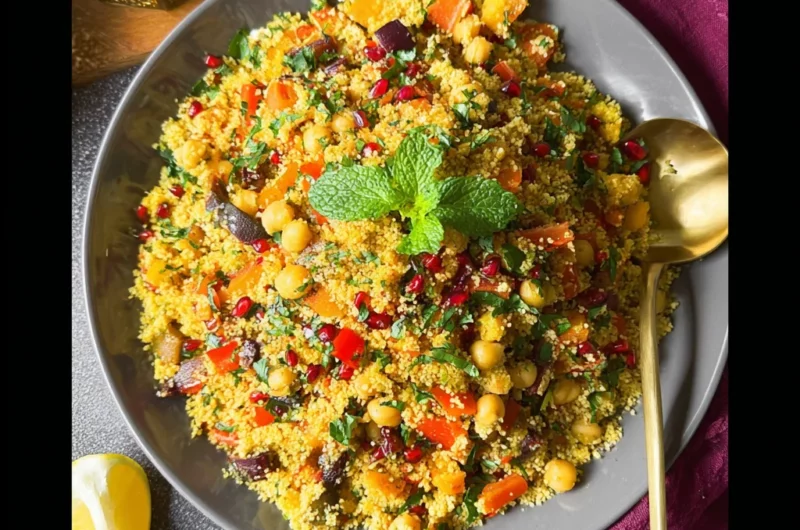
Imagine sitting down to a steaming bowl of Moroccan Couscous, where the warm spices dance together with tender vegetables, creating an aroma that instantly transports you to a bustling Moroccan market. The fluffy couscous grains, light and airy, soak up the rich flavors, making each bite a delightful journey of taste and texture that sings with warmth and comfort.
Every time I prepare this dish, I’m reminded of my first encounter with it at a vibrant family gathering filled with laughter and stories. Moroccan Couscous is not just food; it’s a celebration waiting to happen, perfect for cozy dinners or festive occasions. Get ready to savor an explosion of flavors that will leave you wanting more!
Why Is Moroccan Couscous So Irresistibly Good?
Flavorful spices like cumin and cinnamon create a warm, aromatic experience that transports you straight to Morocco.
Quick to prepare, this dish takes just 45 minutes, making it perfect for busy weeknights or last-minute gatherings.
Versatile ingredients allow you to customize with your favorite vegetables or proteins, ensuring everyone can enjoy a personalized plate.
Healthy and hearty, packed with fiber-rich chickpeas and fresh veggies, it’s a guilt-free indulgence that satisfies.
Incredibly crowd-pleasing, Moroccan Couscous is sure to impress your family and friends at any gathering!
Moroccan Couscous Ingredients
For the Couscous Base
- 2 cups couscous – This fluffy grain is the heart of Moroccan Couscous, soaking up all the flavorful broth and spices.
- 2 cups vegetable broth – Use low-sodium broth for a healthier option and a depth of flavor that enhances each bite.
- 1 tablespoon olive oil – Adds richness to the dish and helps prevent the couscous from becoming sticky.
For the Vegetables
- 1 cup carrots (diced) – Freshly diced carrots bring a natural sweetness and vibrant color to your plate.
- 1 cup zucchini (diced) – This tender vegetable adds moisture and a delicate flavor that complements the spices beautifully.
- 1 cup bell pepper (diced) – Choose any color to add crunch and a pop of color while contributing vitamins and antioxidants.
- 1 cup chickpeas (drained) – These protein-packed legumes make the dish hearty and satisfying, perfect for a fulfilling meal.
For the Spices
- 1 teaspoon cumin – This spice lends an earthy warmth that’s essential in traditional Moroccan dishes.
- 1 teaspoon cinnamon – Adds a hint of sweetness that balances out savory flavors, creating an aromatic experience.
- 1 teaspoon paprika – Offers a subtle smokiness and beautiful red hue, enhancing both flavor and visual appeal.
- 1 teaspoon salt – Essential for bringing all the flavors together; adjust to taste based on your preference.
- 1/2 teaspoon black pepper – Provides a gentle kick that elevates the overall taste without overpowering other spices.
How to Make Moroccan Couscous
1. Boil vegetable broth in a couscous pot until it reaches a bubbling boil. Stir in 2 cups of couscous and 1 tablespoon of olive oil, then remove from heat. Cover and let sit for 5 minutes to allow the couscous to absorb the flavors.
2. Sauté diced carrots, zucchini, and bell pepper in a separate pan with a splash of olive oil over medium heat. Cook until they are tender and vibrant, about 10 minutes.
3. Add drained chickpeas along with spices—1 teaspoon each of cumin, cinnamon, paprika, 1 teaspoon salt, and ½ teaspoon black pepper—to the sautéed vegetables. Stir and cook for an additional 5 minutes, letting the spices infuse their warmth into the mixture.
4. Fluff the couscous with a fork to separate the grains beautifully. Gently combine it with the sautéed vegetables for a colorful and aromatic dish that’s perfect for any meal. Serve warm.
Optional: Garnish with fresh herbs like cilantro or parsley for a burst of flavor!
Exact quantities are listed in the recipe card below.
Tips for the Best Moroccan Couscous
- Perfectly Fluffed Couscous: After letting the couscous sit, use a fork to fluff it gently; this prevents clumping and enhances texture.
- Vegetable Variety: Feel free to mix in your favorite seasonal vegetables; just ensure they’re diced evenly for consistent cooking.
- Spice Balance: Taste as you go! Adjust spices if needed, remembering that Moroccan Couscous should be aromatic but not overpowering.
- Watch the Heat: Sauté vegetables over medium heat to avoid burning. You want them tender, not charred!
- Chickpea Check: Rinse and drain chickpeas well before adding them; this helps remove extra sodium and ensures a fresher flavor.
- Broth Boost: For extra depth, consider using homemade vegetable broth or adding a splash of lemon juice before serving.
How to Store and Freeze Moroccan Couscous
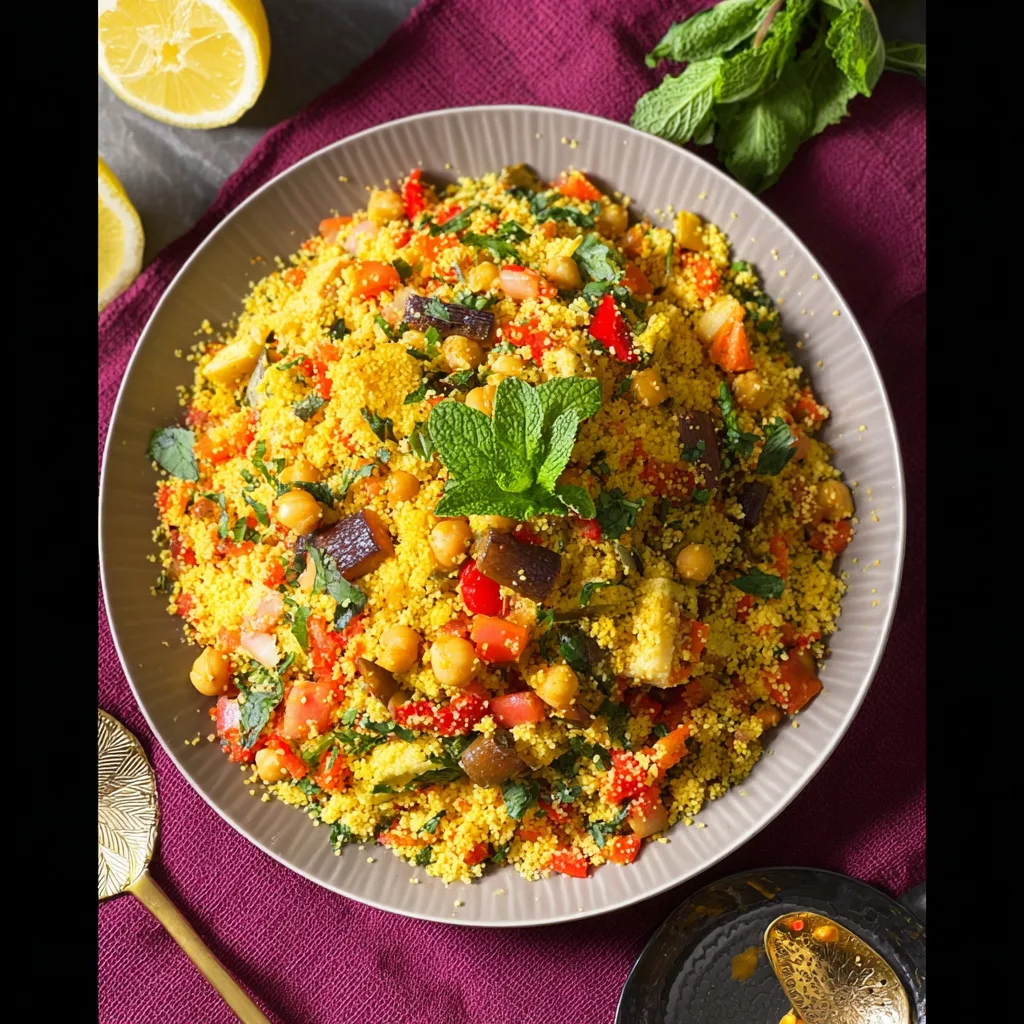
- Fridge: Store leftover Moroccan Couscous in an airtight container for up to 3 days to maintain its flavor and texture.
- Freezer: For longer storage, freeze portions in freezer-safe bags or containers for up to 3 months. Label with the date for easy tracking.
- Reheating: Thaw frozen couscous overnight in the fridge. Reheat gently on the stovetop with a splash of vegetable broth or water, stirring until heated through.
- Vegetable Freshness: If using fresh vegetables, consume within 1-2 days for the best quality, or blanch and freeze them alongside the couscous for later use.
Moroccan Couscous Your Way
Feel free to let your creativity shine and customize this delightful dish to suit your taste buds!
- Gluten-Free: Substitute couscous with quinoa or rice for a gluten-free base. These alternatives will absorb the flavors beautifully while offering a different texture.
- Protein-Packed: Add cooked chicken, lamb, or shrimp to elevate the protein content. This twist not only adds heartiness but also enhances the overall flavor profile.
- Veggie Boost: Incorporate additional vegetables like eggplant, spinach, or sweet potatoes for extra nutrition. The more colorful your dish, the more appealing it becomes!
- Spicy Kick: Introduce diced jalapeños or red pepper flakes for an added heat level. A little spice can transform the entire dish into a flavor explosion.
- Herb Infusion: Toss in fresh herbs like cilantro or parsley at the end for a burst of freshness. Herbs can brighten up the dish and provide aromatic notes that complement the spices perfectly.
- Nutty Crunch: Sprinkle toasted almonds or pine nuts on top before serving for a delightful crunch. They add texture and richness that make each bite satisfying.
- Sweet Twist: Mix in raisins or dried apricots for a hint of sweetness. This unexpected addition pairs wonderfully with the warm spices and makes for a well-rounded flavor experience.
Make Ahead Options
Preparing Moroccan Couscous is a fantastic choice for meal prep, allowing you to enjoy this vibrant dish throughout the week. You can cook the couscous base and sauté the vegetables up to 3 days in advance. To do this, start by bringing 2 cups of vegetable broth to a boil, then stir in 2 cups of couscous and 1 tablespoon of olive oil; remove from heat and let it sit for 5 minutes. In a separate pan, sauté 1 cup each of diced carrots, zucchini, and bell pepper in olive oil until tender, adding 1 cup of drained chickpeas along with the spices (1 teaspoon cumin, cinnamon, paprika, 1 teaspoon salt, and ½ teaspoon black pepper) for an additional 5 minutes. Store everything separately in airtight containers in the fridge. When you’re ready to serve, simply fluff the couscous with a fork and mix in your sautéed vegetables—this will keep your Moroccan Couscous fresh and bursting with flavor!
Moroccan Couscous Recipe FAQs
What type of couscous should I use for this recipe?
For this Moroccan Couscous, using standard couscous is ideal as it cooks quickly and absorbs the flavors beautifully. However, you can also experiment with whole wheat couscous for a nuttier flavor and added health benefits.
Can I add more vegetables to my Moroccan Couscous?
Absolutely! This dish is wonderfully versatile. Feel free to toss in some diced eggplant, peas, or even spinach for extra color and nutrients. Just keep the total volume similar so that the cooking times remain consistent.
How do I store leftovers of Moroccan Couscous?
Once cooled, store your Moroccan Couscous in an airtight container in the refrigerator. It should stay fresh for up to 3 days. When you’re ready to enjoy it again, simply reheat on the stovetop or in the microwave until warmed through.
Can I freeze Moroccan Couscous?
Yes, you can freeze Moroccan Couscous! Allow it to cool completely before transferring it to freezer-safe containers. It will maintain its quality for about 2-3 months. To reheat, thaw overnight in the refrigerator and then warm on the stovetop with a splash of vegetable broth to restore moisture.
What if my couscous is too sticky after cooking?
If you find your couscous has clumped together, it might have been overcooked or not fluffed enough after steaming. To remedy this, try gently fluffing it with a fork once it’s ready and served with a drizzle of olive oil. This helps separate the grains and adds flavor!
How many servings does this recipe yield?
This Moroccan Couscous recipe serves about 4 people comfortably, making it perfect for a family meal or as part of a larger spread at gatherings. Each serving comes in at around 250 calories, allowing you to enjoy this flavorful dish without guilt!
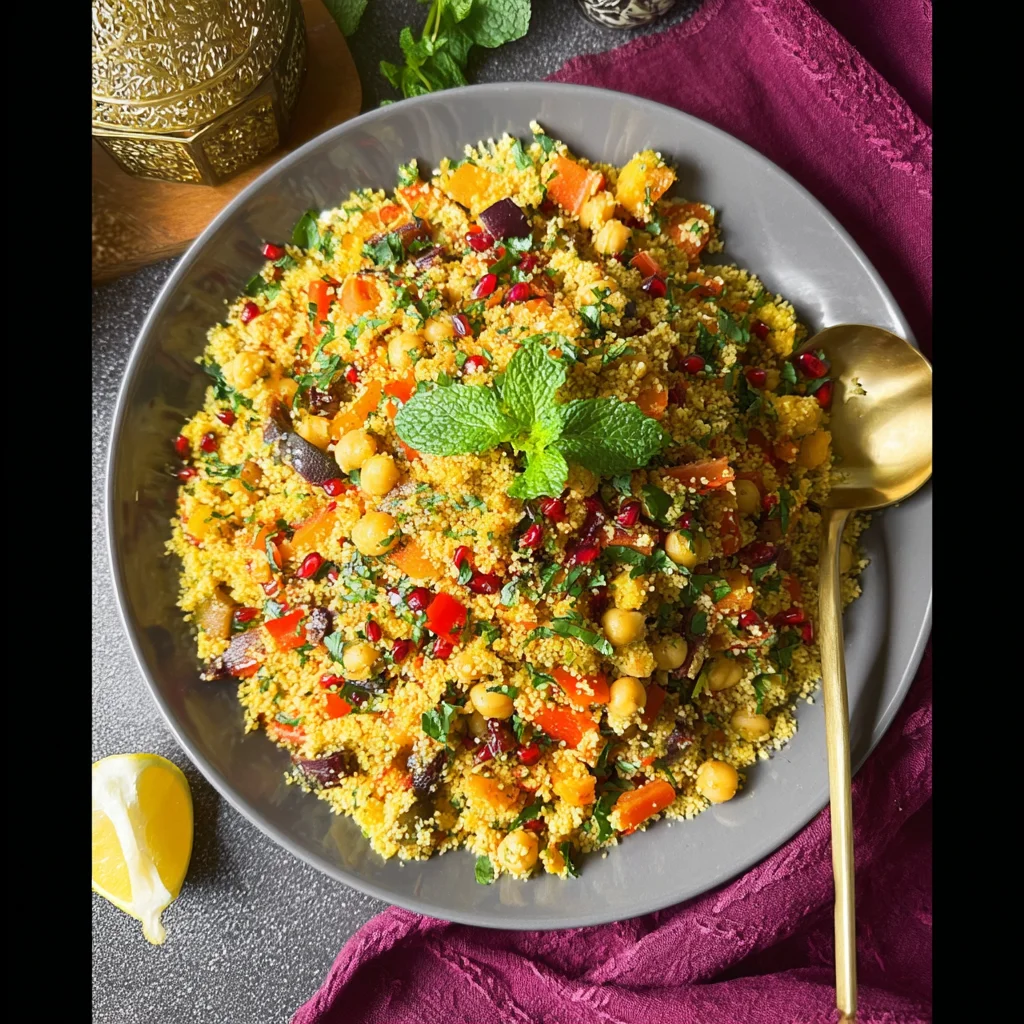
Moroccan Couscous
Ingredients
Method
- In a couscous pot, bring vegetable broth to a boil. Stir in couscous and olive oil, remove from heat, cover, and let sit for 5 minutes.
- In a separate pan, sauté carrots, zucchini, and bell pepper in olive oil until tender. Add chickpeas and spices, cooking for an additional 5 minutes.
- Fluff the couscous with a fork and mix in the sautéed vegetables. Serve warm.